
For years, AI innovation moved faster than regulation.
That dynamic is now changing.
Across financial markets, regulators are introducing frameworks to ensure AI systems operate safely, transparently, and responsibly.
This shift is driving the emergence of a new category of technology:
Compliance-First AI.
What Compliance-First AI Means
Compliance-first AI platforms are designed with governance embedded directly into the system architecture.
Instead of adding controls later, these systems integrate:
• transparency
• auditability
• monitoring
• policy enforcement
from the start.
For financial institutions, this approach enables responsible AI adoption at scale.
Regulatory Pressure Is Increasing
Several regulatory frameworks are shaping the future of AI in finance.
EU AI Act
The EU AI Act categorizes many financial applications—such as credit scoring and risk assessment—as high-risk AI systems requiring:
- transparency
- documentation
- human oversight
- risk monitoring
U.S. Regulatory Oversight
U.S. regulators are increasingly applying model risk management principles to AI systems.
Financial institutions must demonstrate:
- model validation
- explainability
- governance documentation
- oversight processes
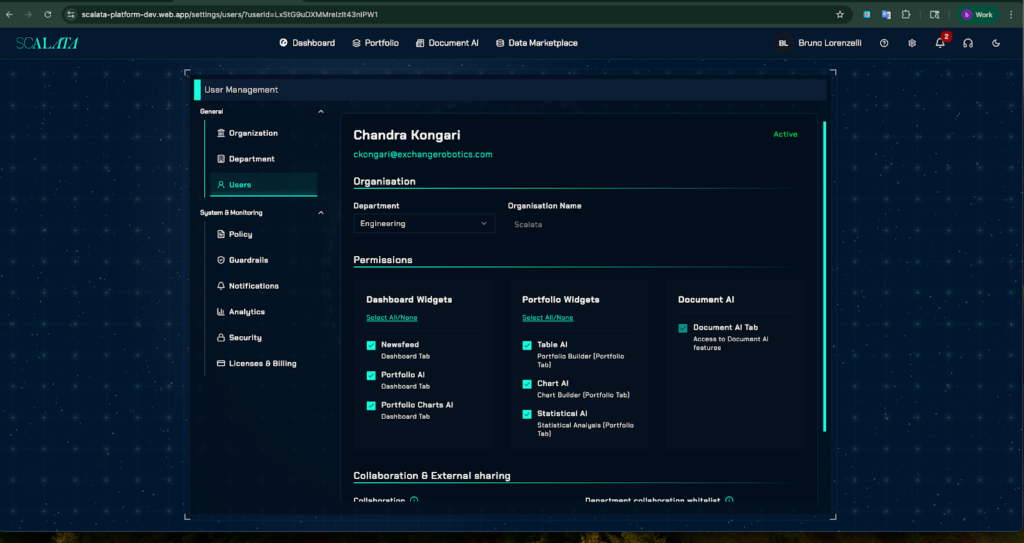
- LLM Models breaches
- LLM Model scoring and controls
- Compliance and guardrails training
Where Compliance-First AI Is Being Used
Forward-thinking financial institutions are already deploying compliance-focused AI across key workflows.
Credit Underwriting
AI assists analysts in reviewing borrower financials and identifying risk indicators.
Using platforms like Scalata, analysts can:
• perform structured borrower analysis
• generate credit insights
• maintain traceable documentation
Portfolio Risk Monitoring
AI can help credit funds monitor portfolio health and detect early warning signals.
Scalata’s research workflows allow teams to aggregate market signals, company financials, and credit indicators into structured insights.
Regulatory Intelligence
Financial institutions must constantly monitor evolving regulations.
AI-driven research agents can:
• track regulatory developments
• summarize policy changes
• generate structured compliance briefs
Scalata’s Deep Research capabilities are designed to support these types of workflows.
The Platforms That Will Win
As regulatory scrutiny increases, financial institutions will prioritize AI systems that provide:
• transparency
• governance
• auditability
• data security
AI tools that cannot meet these requirements will struggle to gain enterprise adoption.
Where Scalata Fits
Scalata.ai was designed specifically for financial professionals operating in regulated environments.
The platform combines:
• AI-native financial research workflows
• governance-ready infrastructure
• structured analysis outputs
• SOC 2 Type II compliant architecture
This enables credit teams, investment professionals, and compliance teams to leverage AI without sacrificing oversight or control.
As AI adoption accelerates across financial markets, compliance-first systems will become the foundation of responsible AI innovation.
