
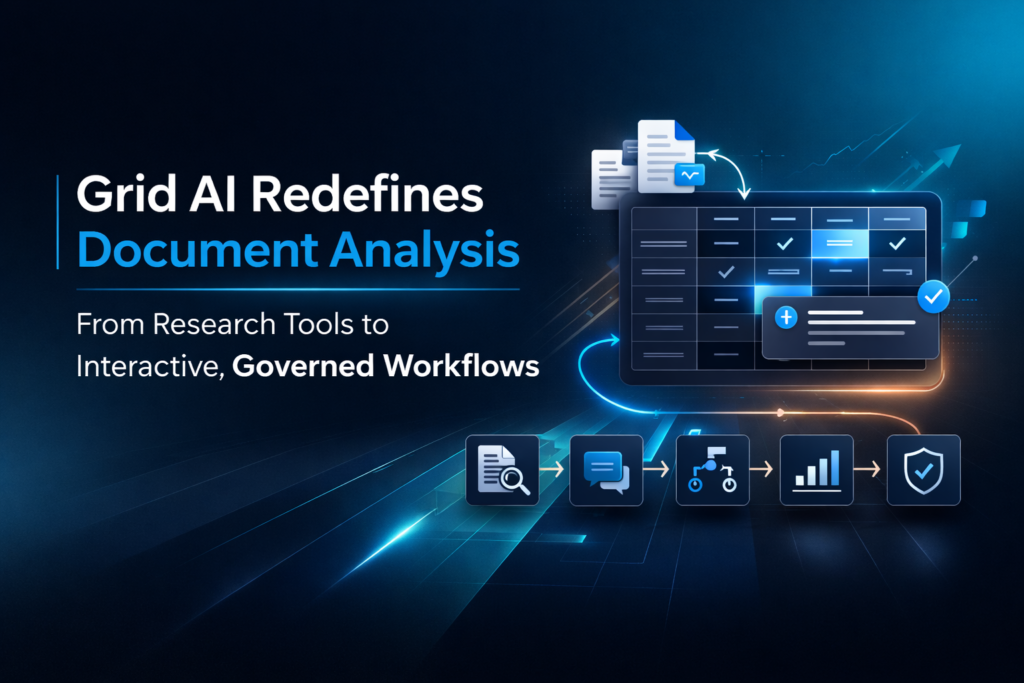
AI is fundamentally reshaping financial workflows.
Grid AI systems like Matrix (Hebbia) have introduced a powerful solution:
the ability to query thousands of documents simultaneously.
This enables:
• faster due diligence
• accelerated investment research
• large-scale document analysis
AlphaSense has similarly expanded AI-powered research by combining proprietary datasets with search and generative AI capabilities.
Together, these platforms represent a major leap forward.
But they represent only the first layer of transformation.
The Shift from Analysis → Interaction → Execution
Grid AI is evolving beyond querying.
Today, the most advanced systems are introducing:
• cell-level interaction (chat with specific outputs)
• structured summaries with citations
• collaborative sharing across teams
• monitoring + alert systems tied to datasets
This transforms document analysis into interactive financial workflows.
But even this is not enough.
Because financial institutions don’t just analyze data.
They operate on it.
The Real Challenge: Institutional Infrastructure
Financial AI must operate within:
• strict compliance requirements
• controlled data environments
• auditable workflows
• role-based access structures
Without these, AI cannot move beyond experimentation.
This is why many institutions hit a wall:
👉 AI tools generate insights
👉 but cannot support production workflows
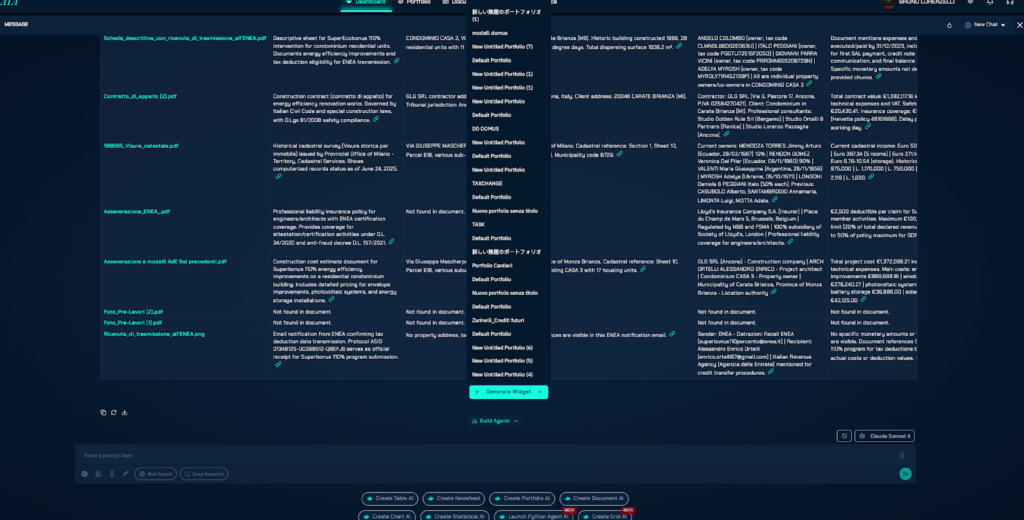
Scalata.ai: From Grid AI to Financial Infrastructure
Scalata extends the Grid AI concept into a full-stack financial system, powered by agentic inference AI.
Instead of stopping at document analysis, Scalata enables:
Interactive Document Grids
Grids become dynamic systems where users can:
• query, chat, and validate at the cell level
• trace outputs back to source documents
• share insights across teams
Workflow Automation via AI Agents
AI agents execute full workflows:
• ingest data
• normalize information
• run analysis
• generate outputs
• monitor continuously
Inference-Based Monitoring
This is where Scalata differentiates further.
Instead of static outputs, the system continuously:
• monitors financial data
• triggers alerts
• updates insights in real time
This is Inference AI applied to finance.
Governed AI Architecture
All of this operates within:
• compliance guardrails
• data governance frameworks
• role-based permissions
• integrated data marketplace
From Tools to Systems
Matrix and AlphaSense represent the future of research.
Scalata represents the future of financial systems.
The difference is not intelligence.
It is:
• workflow integration
• real-time inference
• governance infrastructure
Conclusion
The next generation of financial AI will not be defined by better queries.
It will be defined by:
✔ interactive systems
✔ automated workflows
✔ continuous monitoring
✔ governed intelligence
Because in financial services:
👉 AI must not only understand data
👉 it must operate within systems institutions can trust
