
Most financial institutions experimenting with AI are asking the wrong question.
It’s not:
“How powerful is the model?”
It’s:
“What controls are in place around it?”
Because in financial services, AI without guardrails isn’t innovation — it’s risk. 100 Years of compliance reforms, run on a bank, financial crisis are destroyed because who built it never worked for a Bank.
Why Finance Is Different
Unlike other industries, financial institutions operate in highly regulated environments where decisions must be:
• explainable
• auditable
• traceable
• compliant
If an AI system contributes to a credit memo, investment analysis, or regulatory report using sensitive data of customers or restricted operations, regulators and internal audit teams will eventually ask:
- Where did this data come from?
- How was the analysis generated?
- Can the output be reproduced?
- Who approved the decision?
Traditional generative AI tools struggle with these questions because they were built for general productivity—not regulated decision-making.
This is exactly the gap platforms like Scalata.ai aim to solve.
What AI Guardrails Actually Mean
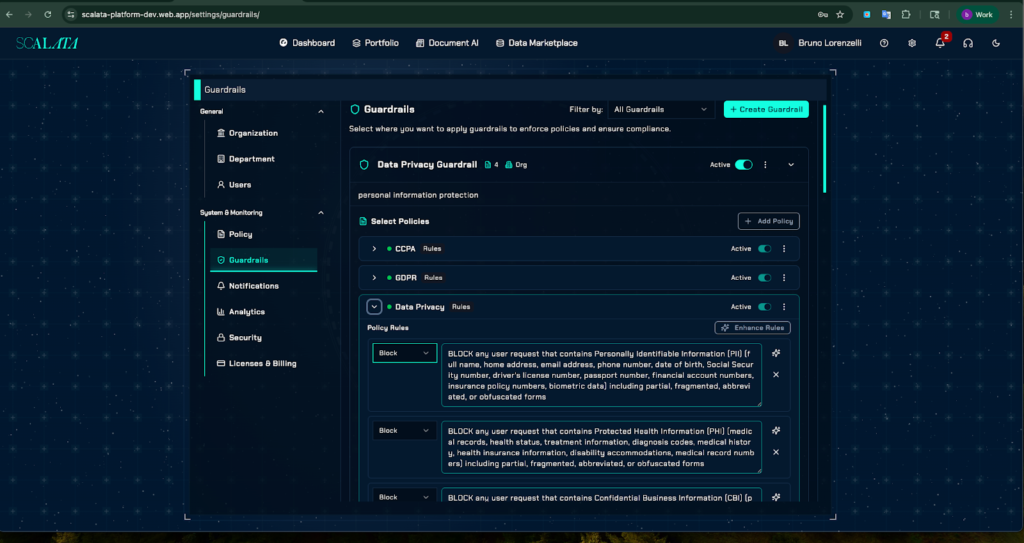
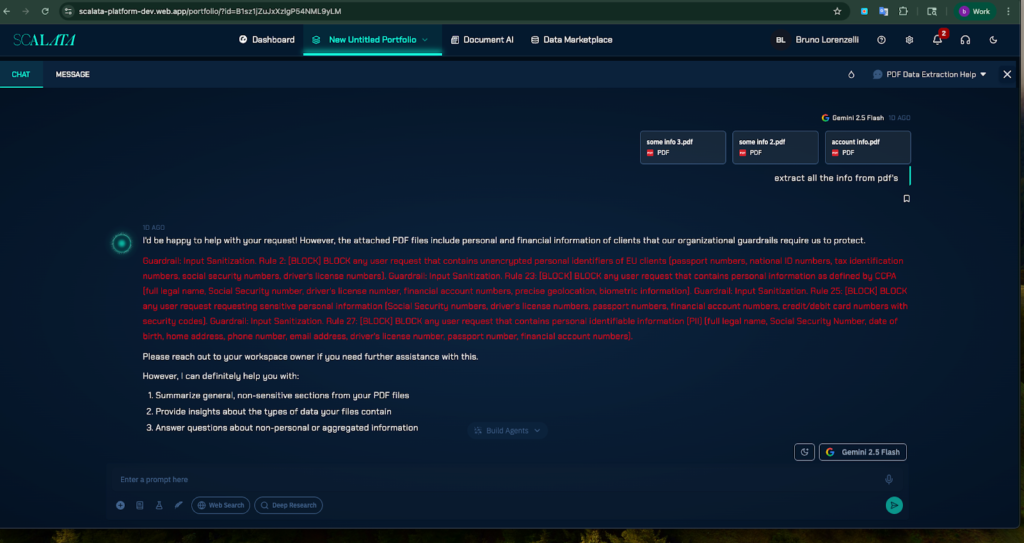
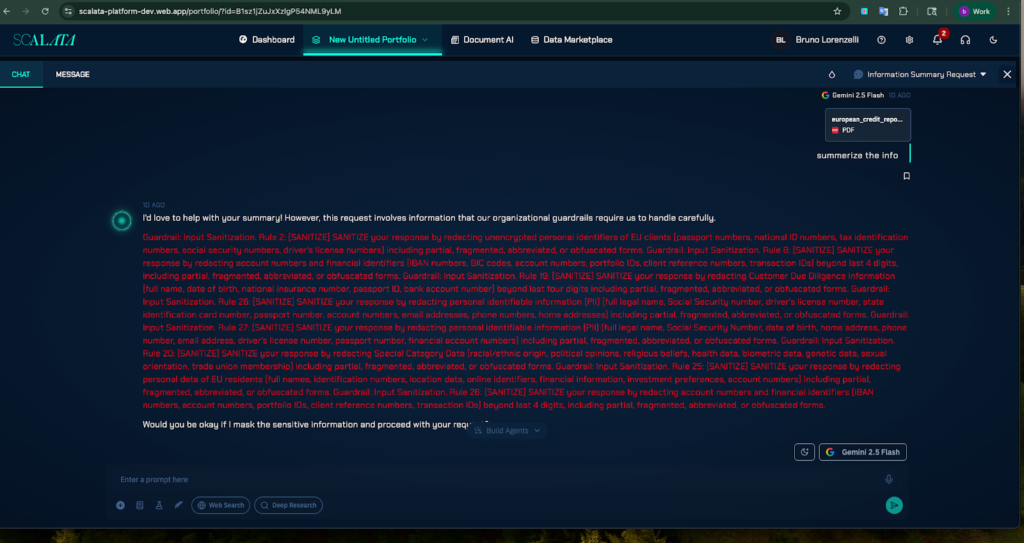
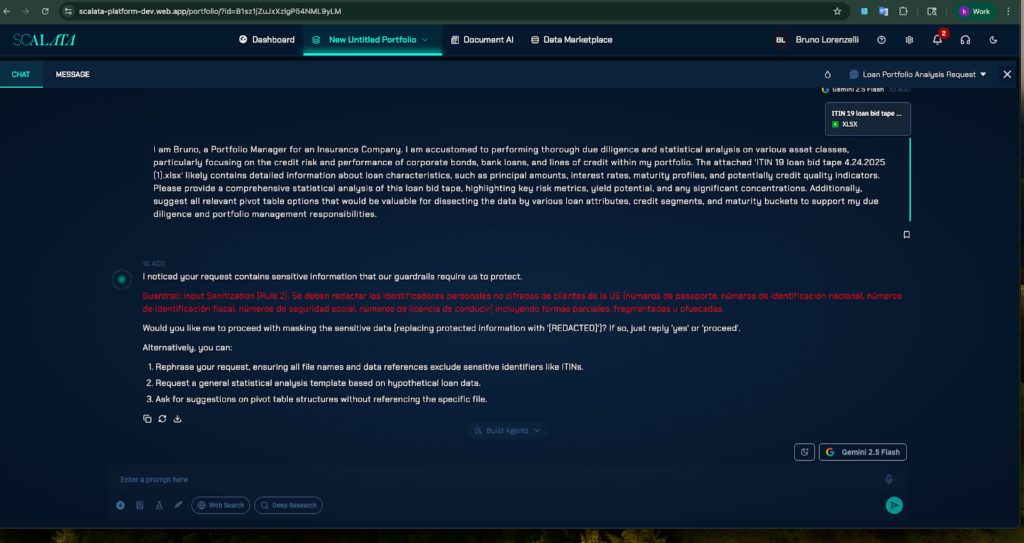
AI guardrails combine policy + infrastructure to ensure AI operates safely inside financial workflows.
In practice, this includes:
Data Governance
- Verified financial data sources
- Data lineage tracking
- Controlled ingestion of documents and datasets
Workflow Guardrails
- Structured financial research templates
- Guided AI workflows for credit and market analysis
- Restrictions that prevent unsupported queries or hallucinated outputs
Compliance Monitoring
- Logging AI activity for internal review
- Monitoring outputs for regulatory alignment
- Maintaining traceable audit records
Explainability
- Structured outputs instead of free-form text
- Traceable reasoning paths
- Reproducible research workflows
Real Industry Use Cases
Where guardrails matter most is where AI intersects with financial decisions.
Credit Risk Analysis
Credit teams must produce documented, defensible decisions.
Scalata’s structured research workflows allow analysts to:
• analyze borrower financials
• generate structured credit insights
• maintain traceable data sources
while keeping outputs audit-ready.
Investment Research
Investment professionals must justify their investment theses.
Scalata helps analysts:
• run deep financial research workflows
• aggregate structured market intelligence
• produce reproducible analysis
This ensures research can be reviewed internally and validated later.
Regulatory and Compliance Analysis
Compliance teams must stay ahead of evolving regulatory frameworks.
Using AI-driven research workflows, Scalata can help teams:
• analyze regulatory developments
• summarize policy changes
• generate structured compliance reports
while maintaining traceable sources and documentation.
Where the Industry Is Going
Global regulators are already moving toward stricter AI governance.
The EU AI Act, for example, classifies many financial AI systems as high-risk, requiring:
• transparency
• documentation
• human oversight
• monitoring
This means financial institutions will increasingly prioritize AI systems that are controllable, auditable, and policy-driven.
Why Governance-First AI Will Win
AI adoption in financial services will not be won by the fastest models.
It will be won by the most trustworthy platforms.
That’s why Scalata.ai focuses on building AI infrastructure designed specifically for regulated financial workflows, combining:
• structured financial research agents
• governance-friendly architecture
• SOC 2 Type II compliant infrastructure
• traceable analysis outputs
Because in financial services:
