
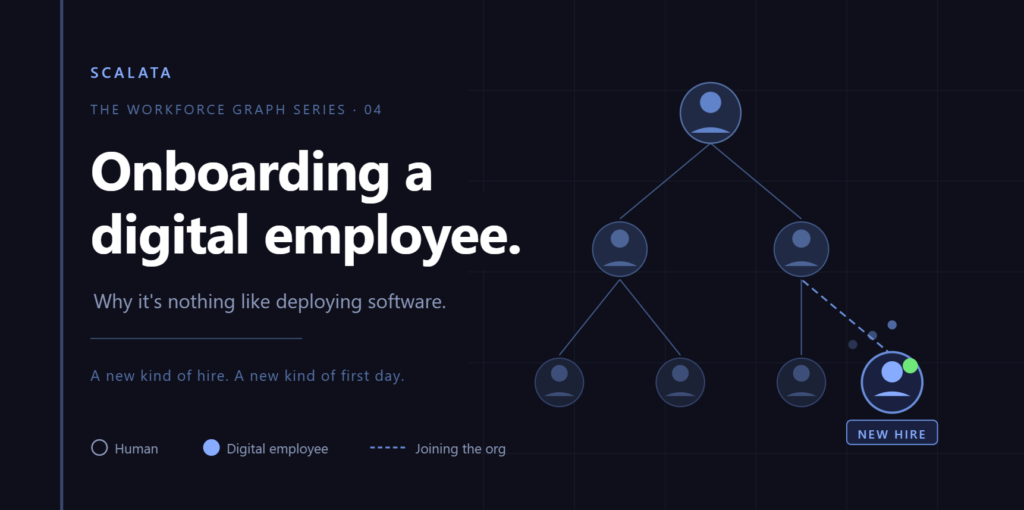
When a new hire joins your company, you don’t just hand them a laptop and wish them luck. You set them up with an email address, add them to the right Slack channels, introduce them to their manager, walk them through what they own, tell them who to escalate to, and make sure they have access to exactly the systems they need — and none they don’t. There’s a whole machinery behind that first week, and it exists for good reason. A person who doesn’t know their role, their relationships, or their boundaries is either going to be ineffective or dangerous. Usually both.
Most companies onboarding their first digital employees are skipping all of that. They’re treating it like a software deployment — spin it up, point it at some systems, see what happens. And then they’re surprised when what happens is a mess.
The deployment mindset is the wrong mindset
Software doesn’t have a role. It has a function. You install it, configure it, and it does the thing it was built to do. The relationship between software and your organization is shallow by design — it doesn’t need to know your org structure, it doesn’t have a manager, it doesn’t escalate to anyone, and it doesn’t accumulate context about your business over time. It just runs.
A digital employee is different in every one of those ways. It has a role — a defined set of responsibilities, a scope of work it owns, a place in the chain of accountability. It has relationships — a manager it reports to, colleagues it collaborates with, workflows it plugs into. It has permissions that should match its role, not just its technical requirements. And it accumulates context — the longer it operates, the more it knows about your business, your customers, and your processes.
When you treat onboarding a digital employee like deploying software, you skip all of that. You get something that technically works but organizationally floats — no clear owner, no defined scope, no escalation path, no way to tell whether it’s doing the right thing or just doing things.
What real onboarding looks like
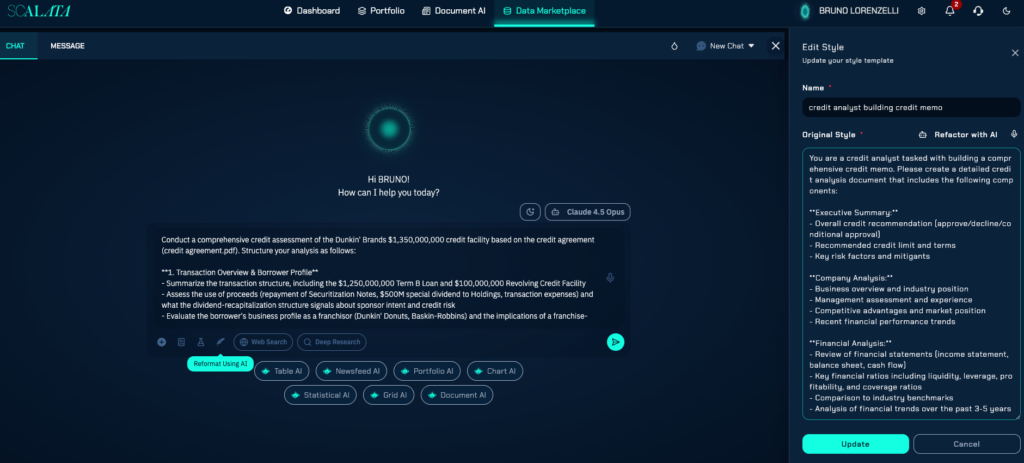
Onboarding a digital employee properly means answering the same questions you’d answer for a human hire. They just look slightly different.
What does this role own? Not “what can this agent do” — what is it responsible for? There’s a difference between a digital employee that can draft customer emails and one that owns the first-response queue for your enterprise accounts. Capability is a starting point. Ownership is what makes it a role.
Who does it report to? Every digital employee needs a human manager — someone accountable for its output, responsible for reviewing its performance, and empowered to change its scope or shut it down. This isn’t bureaucracy. It’s the minimum viable accountability structure. Without it, when something goes wrong (and eventually something will), you’re left asking “whose problem is this?” in a room full of people pointing at each other.
What does it have access to, and why? Permissions for a digital employee should follow the same logic as permissions for a human: least privilege, scoped to the role, reviewed when the role changes. A digital employee that handles customer billing inquiries should have access to billing records. It probably shouldn’t have access to HR data, code repositories, or anything else that’s outside its lane. Getting this right at onboarding is vastly easier than cleaning it up after the fact.
Who does it hand off to, and who hands off to it? Workflows don’t start and end with a single worker. They move through people and systems. Before a digital employee goes live, you need to know where it sits in those flows — what it receives, what it produces, who it sends work to, and who it receives work from. If those handoffs aren’t defined, the digital employee is an island, and the cost of that island shows up as human time spent bridging it.
What does escalation look like? Every digital employee will eventually encounter something it can’t or shouldn’t handle — a policy exception, a frustrated customer, a novel situation, a decision that requires human judgment. The escalation path needs to be defined before that happens, not improvised after. Who does it escalate to? What context travels with the escalation? What’s the fallback if that person is unavailable?
The moment it gets real
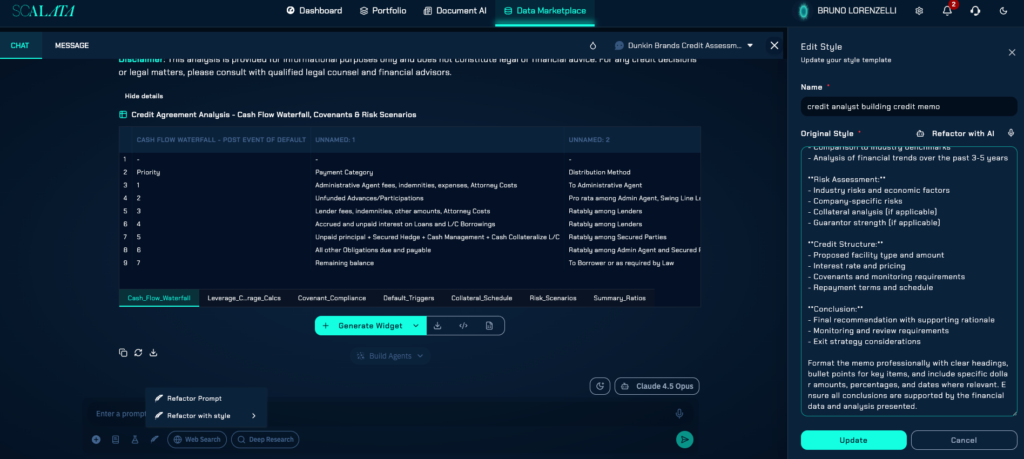
Here’s the thing about answering these questions properly: it forces a clarity about your own operations that most companies don’t have.
When you sit down to define what a digital employee owns, you often discover that nobody has ever written down who owns that work among the humans doing it today. When you try to map its handoffs, you realize the handoffs between humans are undocumented too. When you think about escalation paths, you find out that the current process is “ping someone on Slack and hope they respond.”
This is uncomfortable, but it’s useful. Onboarding a digital employee surfaces the organizational debt that human improvisation has been quietly subsidizing. Humans are forgiving — they figure it out, they ask around, they fill the gaps. Digital employees are not forgiving. They need the structure to be real.
So onboarding a digital employee is, in part, an exercise in making your organization legible to itself. The companies that do this well come out of it with clearer processes, better-defined roles, and a workforce — human and digital — that actually knows how it works.
What Scalata does differently
Most platforms treat onboarding as configuration. You fill out a form, connect some tools, maybe write a system prompt, and you’re done. The digital employee exists, technically. But it doesn’t belong anywhere. There’s no manager attached to it, no defined scope, no escalation path that the system actually enforces. Those things might be documented somewhere, in a doc someone wrote, in a Slack thread nobody will find in six months.
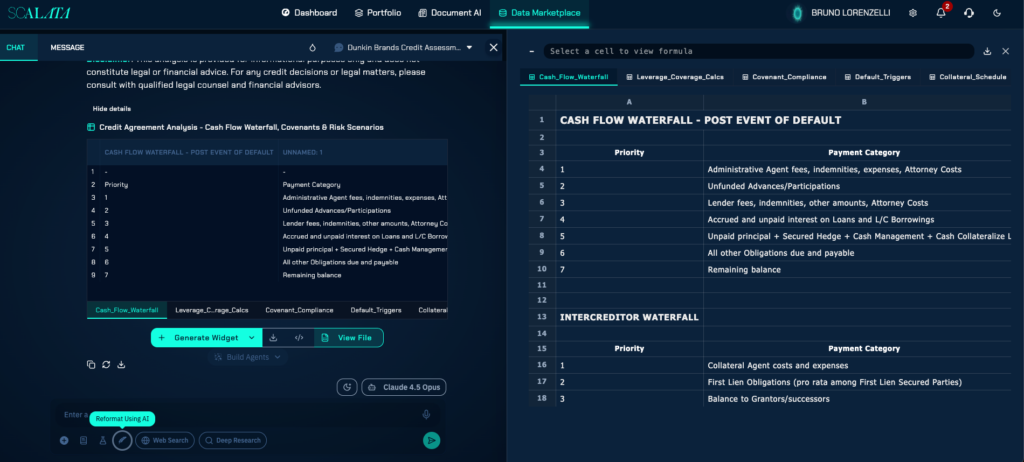
At Scalata, onboarding is structural. When you bring a digital employee into the platform, you’re attaching it to your actual organization — giving it identity, a reporting line, a scope, permissions tied to its role, and handoff points defined in the same system that runs your workflows. The result isn’t just a configured agent. It’s a member of your workforce, with everything that implies: accountability, visibility, and a place in the chain of work that humans and digital employees share.
This matters most the first time something goes wrong. With a loosely deployed agent, “what happened” is a forensic exercise. With a properly onboarded digital employee, it’s a query. Every action is attributable to a named entity with a manager and a defined scope. Every handoff and escalation is on record. The audit trail exists because the structure exists — not because someone remembered to turn on logging.
The bar is higher than you think, and that’s fine
Onboarding a digital employee properly takes more upfront work than spinning up an agent and pointing it at your data. It requires thinking about roles, relationships, permissions, and escalation paths with a rigor that most organizations haven’t applied to their human workforce, let alone their digital one.
But the companies doing this well aren’t finding it burdensome. They’re finding it clarifying. The structure you build to onboard one digital employee becomes the template for the next five. The process clarity you develop to define one role sharpens your thinking about all the roles adjacent to it. The governance you put in place for one escalation path extends naturally to the rest.
The companies that bolt agents onto undefined processes get undefined results. The companies that onboard digital employees the right way — with real roles, real accountability, and real structure — get something that compounds: a workforce that runs better, audits cleanly, and scales without chaos.
That’s the difference between deploying AI and operating it. The second one is harder. It’s also the only one that works.
