Perspective
Code You Can Trust
 Code You Can Trust
Code You Can Trust
"AI is a black box." This is the objection we hear most often from finance teams considering AI tools. It's also wrong—or at least, it doesn't have to be true.
The black-box critique is valid for many AI tools. You provide an input, receive an output, and have no visibility into what happened in between. The system might be brilliant or it might be hallucinating—you have no way to tell until something goes wrong.
For consumer applications, this opacity is often acceptable. If your AI assistant recommends a restaurant that turns out to be mediocre, the stakes are low. But for regulated finance—where every calculation may need to be defended to auditors, regulators, or counterparties—opacity is a dealbreaker.
"The AI did it" is not an acceptable explanation when a regulator asks how you arrived at a risk calculation. "The model produced this output" doesn't satisfy an auditor asking about the basis for a valuation. In finance, accountability matters—and black boxes destroy accountability.
 A Different Choice
A Different Choice
But opacity is a design choice, not a requirement. Scalata made a different choice.
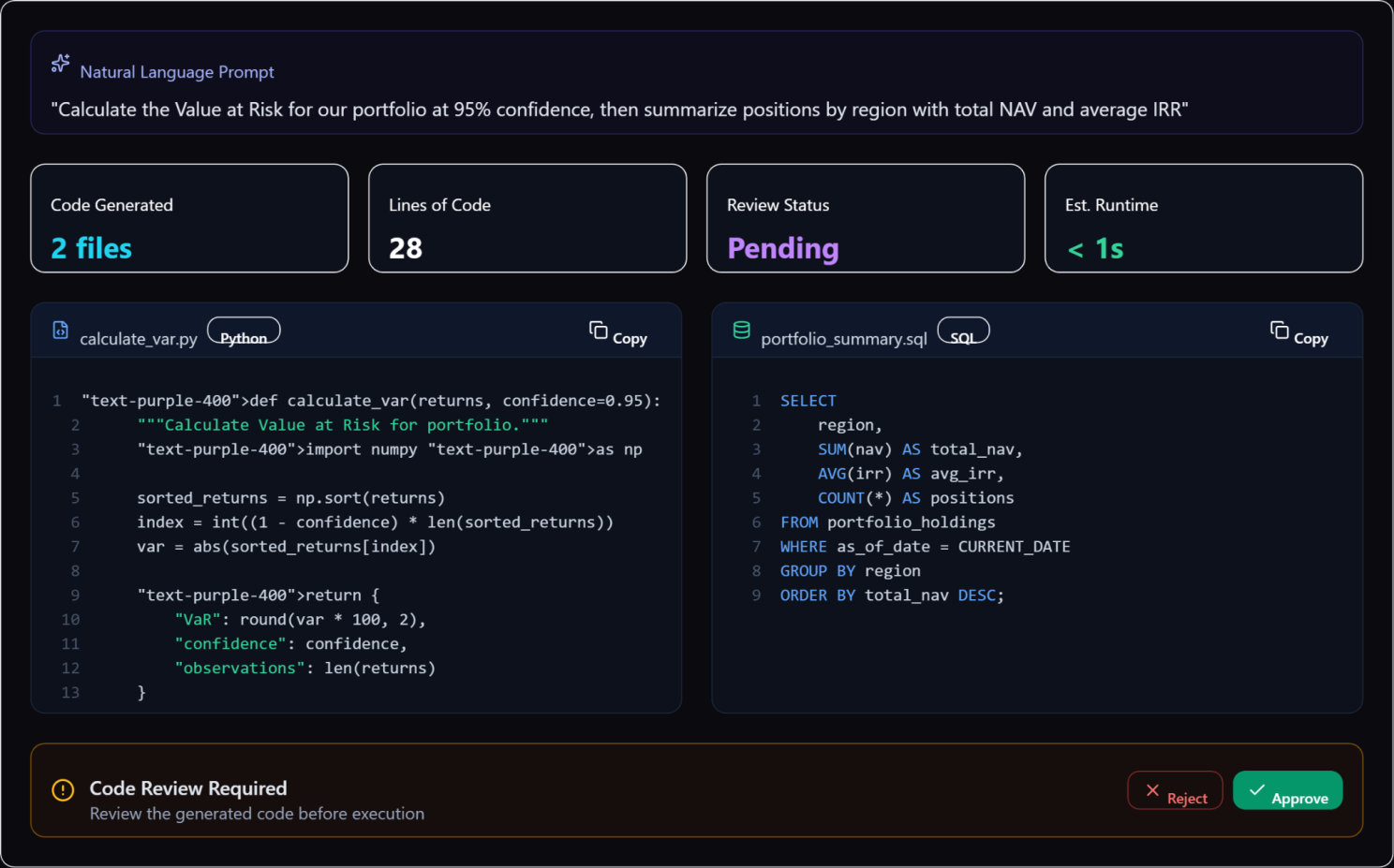
Scalata's CodeGen AI operates on a simple but powerful principle: "Generate the query, the script, or the model code—reviewable before anything runs."
Read that again: reviewable before anything runs. This is a fundamental architectural decision, not a feature checkbox. Every piece of generated code is surfaced for human review before execution. You see exactly what the AI proposes to do. You decide whether to proceed.
The AI doesn't act autonomously and then explain itself afterward. It proposes, you review, and only then does it execute. The human remains in the loop at the critical moment—before anything happens, not after.
 Reviewable Code
The Python Agent: Intent Meets Determinism
Scalata's Python Agent embodies this philosophy. As the platform explains: "Large language models understand intent, but Python agents execute the deterministic logic financial institutions require. Together they enable auditable, intelligent financial data processing at scale."
This is a crucial distinction that many AI implementations blur. Language models are good at understanding what you want—interpreting natural language, grasping context, handling ambiguity. But they're probabilistic by nature. The same prompt might produce slightly different outputs on different runs.
Financial calculations require determinism. 2 + 2 must always equal 4. A present value calculation must produce the same result every time given the same inputs. Regulatory capital ratios can't vary based on the AI's mood.
Scalata separates these concerns. The language model interprets your intent—what calculation do you want, what data should it use, what format should the output take. The Python agent executes it with the precision and repeatability that financial calculations demand. And the code that bridges these two is visible, reviewable, and auditable.
Grounded in Truth
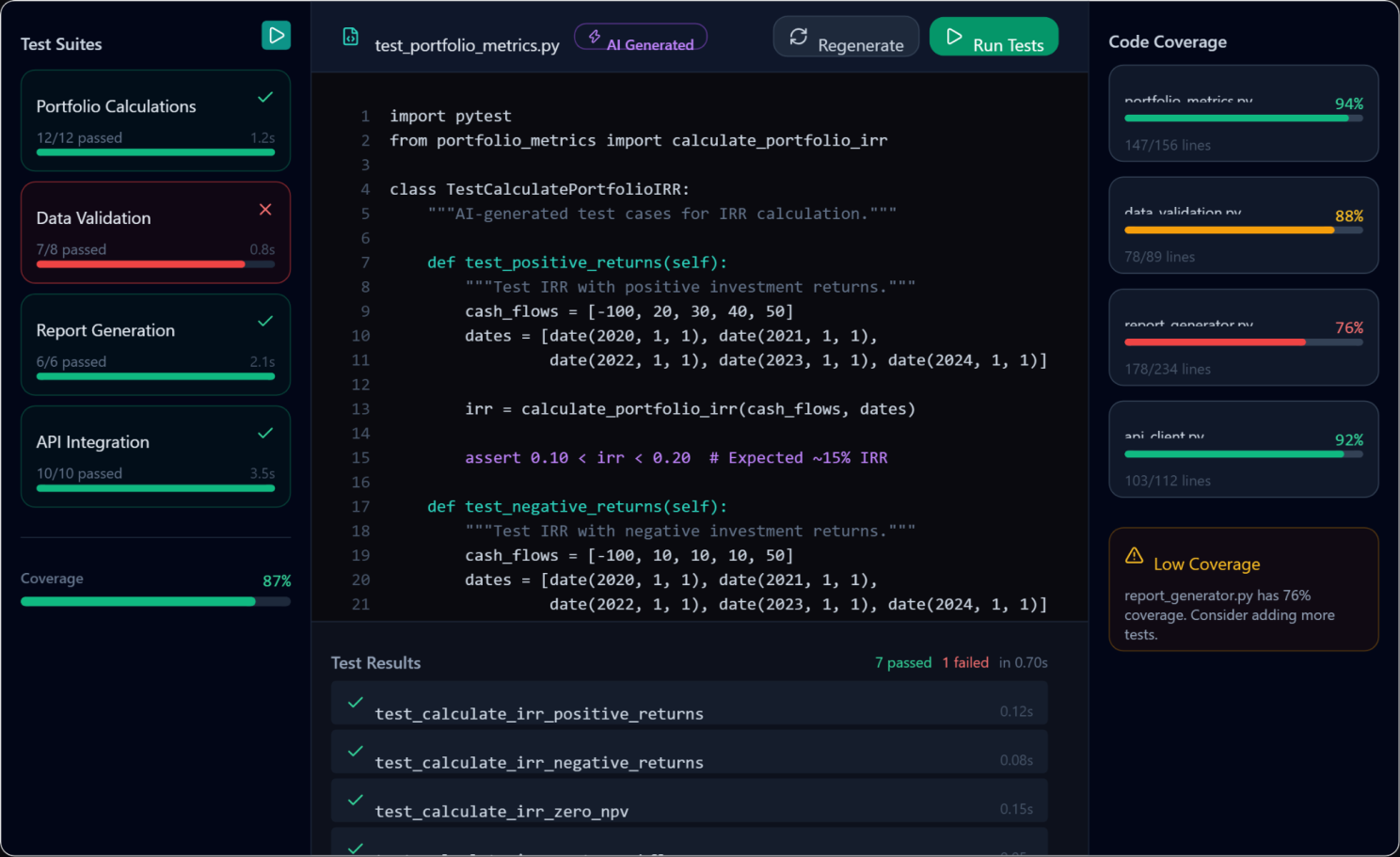
Reviewable code is part of a broader commitment to transparency. Scalata's core principle states: "Every answer is cited and traceable. Anti-hallucination guardrails keep the analysis honest and defensible."
When the AI generates a calculation, you can trace it back to its inputs. When it produces an answer, you can see the logic that produced it. When it makes a claim, you can verify the source. This isn't just good practice—it's essential for operating in regulated environments where "trust me" isn't sufficient.
 Grounded in Truth
The Workflow in Practice
In practice, the workflow looks like this:
- You describe what you need in plain language: "Calculate the weighted average cost of capital for our European subsidiaries using local risk-free rates."
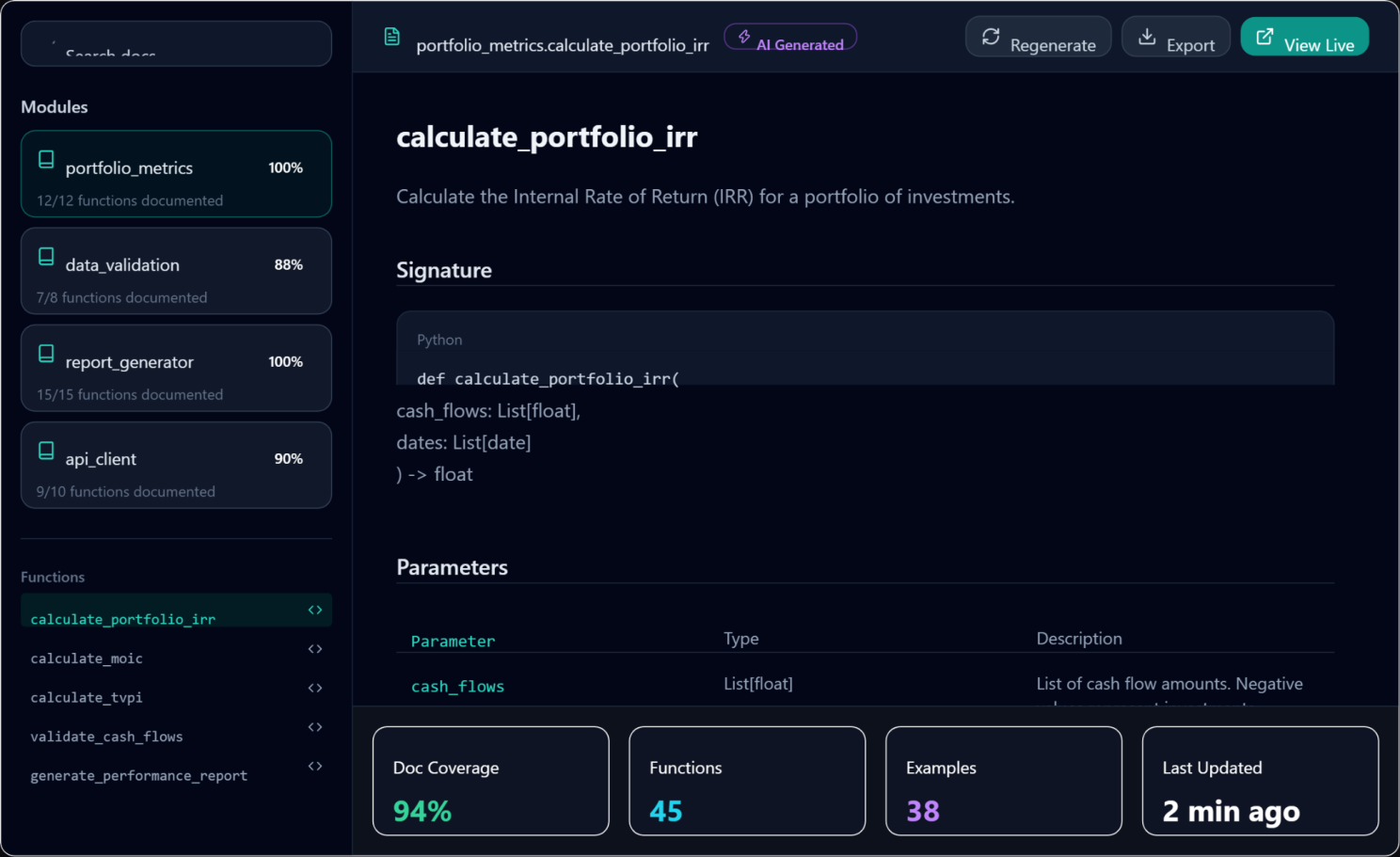
- The platform generates the code to accomplish it—the data queries, the calculation logic, the output formatting.
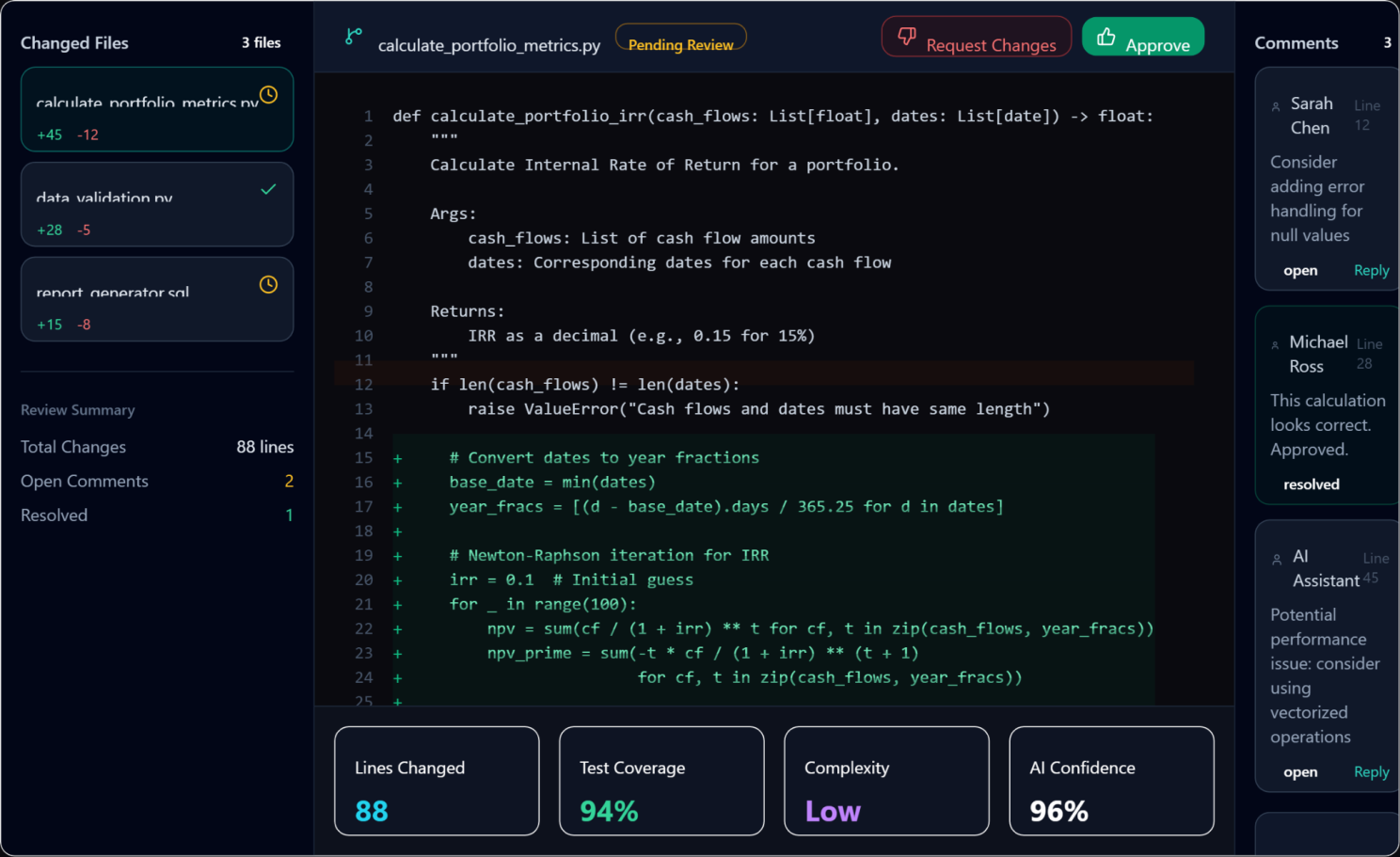
- You review the code: Is the logic correct? Are the right data sources being used? Does the calculation methodology match your requirements?
- Only after your approval does execution proceed.
- The results are delivered with full traceability back to the code and data that produced them.
For routine tasks, this review might take seconds—a quick scan to confirm the approach matches your intent. For complex or high-stakes calculations, you can take the time to verify thoroughly, line by line if necessary. The point is that you always have the option—and the audit trail shows that you exercised it.
 The Workflow in Practice
The Trust Gap, Bridged
There's a trust gap in AI-generated outputs. Users don't know whether to trust the results, so they either accept them blindly (risky) or reject AI tools entirely (wasteful). Reviewable code bridges this gap.
You don't have to trust the AI. You can verify what it's doing. You can apply your professional judgment to the proposed approach. You can catch errors before they propagate. And when the results are correct, you can be confident in them—not because the AI said so, but because you verified the logic yourself.
AI speed with human accountability. That's not a compromise—it's the only way AI should work in regulated finance. The black box? It's a choice. Choose differently.