Perspective
The Data Complexity Crisis in Finance
 The Data Complexity Crisis in Finance
The Data Complexity Crisis in Finance
How Table AI and Financial Models Are Rewriting the Rules of Schema Mapping
Introduction: The Hidden Complexity of Financial Data
Financial institutions sit on some of the most complex, fragmented, and contradictory data landscapes in any industry.
A major bank might operate hundreds of legacy systems—each with its own schema, naming conventions, and data types—all supposedly describing the same underlying financial reality.
The result is a labyrinth of mismatched tables, broken foreign keys, and orphaned records that cost billions of dollars annually in reconciliation, compliance failures, and missed opportunities.
Traditional ETL tools and even first-generation AI platforms fail here.
They can move data, but they cannot understand it.
That distinction—between data movement and data intelligence—is where Table AI fundamentally changes the game.
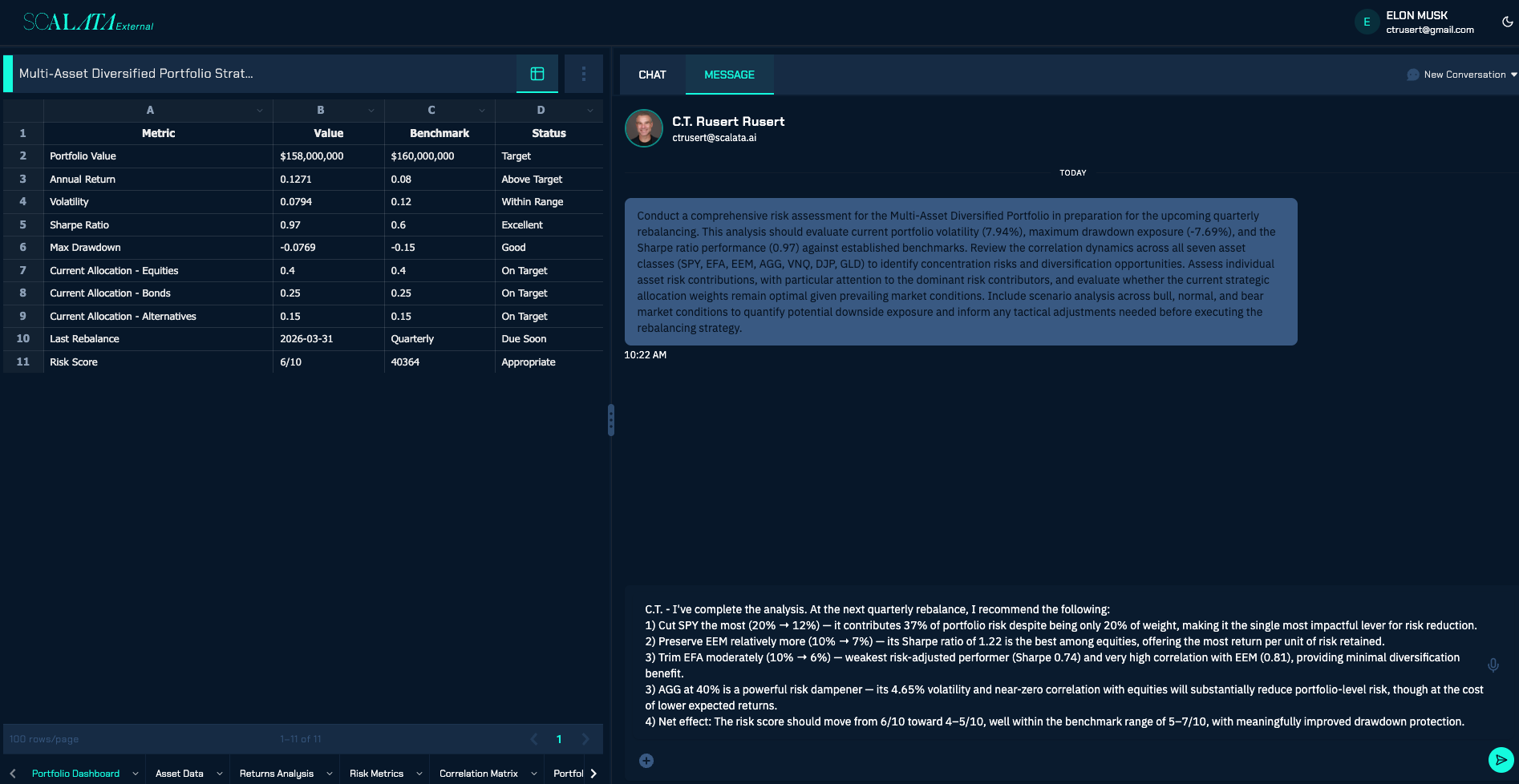
The Mortgage Industry Dilemma: Commercial vs. Residential
 Residential and Commercial Mortgage Data Mapping
Consider one of the most illustrative use cases in all of banking: the divergence between commercial and residential mortgage data.
A residential mortgage record is relatively standardized.
It contains:
- Borrower PII
- Loan amount
- Property address
- LTV ratio
- Amortization schedule
- Escrow details
- FICO scores
Freddie Mac and Fannie Mae have driven a decades-long push toward standardization in this space.
Yet even here, a mid-size regional bank may store these fields across four different core systems:
- Their original 1990s mainframe
- A 2005 Loan Origination System (LOS)
- A 2015 Salesforce integration layer
- A 2022 cloud data warehouse
The field borrower_income may appear as:
BRWR_ANN_INCAnnualizedBorrowerIncomecontact.Annual_Income__cborrower_gross_annual_income
These are all the same concept.
A human analyst knows this.
A traditional mapping tool does not.
Use Case: A top-10 U.S. bank estimated that 34% of data analyst time was spent on schema reconciliation between residential mortgage systems alone—before any actual analysis could begin.
Commercial mortgages introduce an entirely different order of magnitude in complexity.
A commercial real estate loan might involve:
- SPVs (Special Purpose Vehicles)
- Multiple guarantors
- Tenant rent rolls
- Operating statements
- Cap rate analysis
- Debt Service Coverage Ratios (DSCR)
- Phase-I environmental assessments
The schema for a $50M office building loan in Manhattan is fundamentally different from a $2M SBA-backed small business property in Kansas City—yet both live inside the same commercial_mortgage table.
Table AI solves this by understanding the semantic meaning of fields, not just their syntactic labels.
Using contextual schema mapping, it can identify that:
DSCR_RATIODebtServiceCoverageRatiodscr_calc_value
all represent the same KPI—even across completely different databases with no shared lineage.
Schema Mapping: Where Competitors Fall Short
 Schema Intelligence Across Legacy Financial Systems
The core failure of competing platforms comes down to a single architectural limitation:
They write SQL, not schemas.
They can generate a SELECT statement against a known table, but they cannot reason about the relationship between tables they have never been explicitly trained on.
This is the tape-cracking problem.
Legacy financial data is often stored in flat-file formats—fixed-width COBOL records, mainframe tapes, and positional data extracts—where there is no schema at all.
The data structure exists only in the institutional knowledge of a retiring programmer or a 300-page technical specification document written in 1987.
Competing platforms:
- Require a pre-defined schema before they can operate
- Fail on multi-source joins where field semantics differ across systems
- Cannot handle hierarchical financial data (parent company → subsidiary → product line → account)
- Break on temporal schema changes, where a field's meaning changed after a system migration
- Cannot write back into a database schema, only read from it
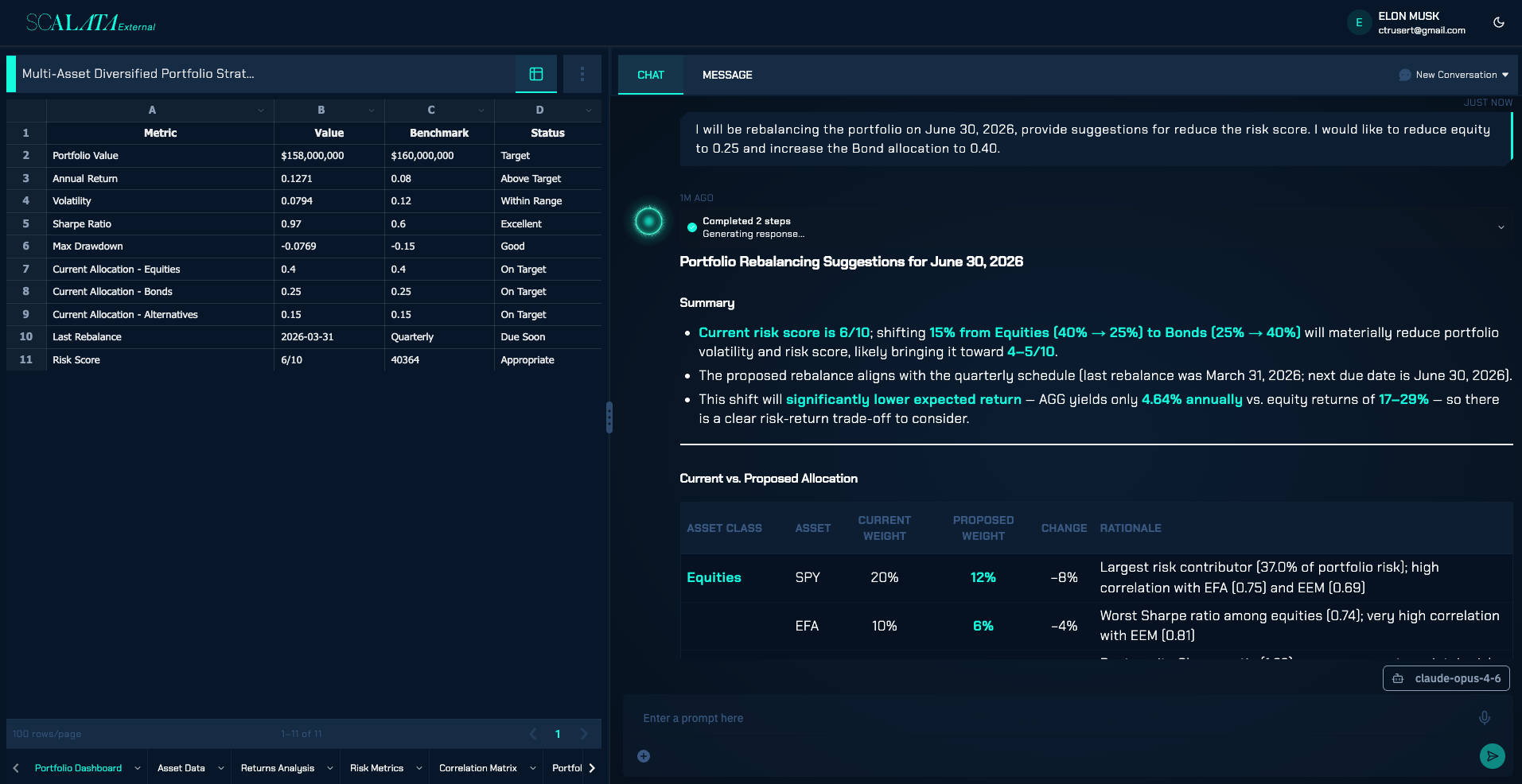
Table AI's financial agent, by contrast, can:
- Ingest a raw positional data file
- Reconstruct the implied schema using machine learning pattern recognition
- Validate that schema against known financial domain ontologies
- Write a clean, documented schema directly into the target data warehouse
This is not a feature—it is a paradigm shift.
The Financial Agent in Action: Investment Banking Use Case
At a leading investment bank, the M&A advisory team required rapid analysis of target company financials across dozens of due diligence data rooms.
Each data room contained financial statements in different formats:
- Excel workbooks with inconsistent tab naming
- PDF documents
- CSV exports from ERP systems such as SAP and Oracle Financials
The Table AI financial agent was deployed to:
- Ingest all source materials
- Identify the underlying financial schema in each source
- Map those schemas to a unified chart of accounts
- Flag discrepancies, such as capitalized expenses that GAAP would require to be expensed
- Generate a clean, queryable financial data model ready for valuation analysis
What previously took:
- Four analysts
- Two weeks
was completed in:
- Under four hours
- Higher accuracy
- A complete audit trail of every transformation decision
Key Insight: The difference is not speed—it is intelligence. Table AI doesn't just move data faster; it understands what the data means and why the mapping decision was made.
Conclusion: Schema Intelligence as a Competitive Moat
In financial services, data is not just an operational asset—it is the product.
Banks that can rapidly and accurately unify their data landscape will:
- Make better credit decisions
- Identify risk earlier
- Price products more precisely
- Comply with regulations at lower cost
Table AI's schema mapping capability is not a tool in a toolbox.
It is the foundation of a new class of financial intelligence—one that transforms data complexity from a burden into a strategic advantage.