Perspective
Ask Your Data Anything
 Ask Your Data Anything
Ask Your Data Anything
You have a question. It's not complicated: What was our EBITDA margin by region over the last eight quarters? The answer exists somewhere in your systems. The data was captured, stored, and is sitting on a server waiting to be useful. But getting to it? That's where things break down.
Maybe you email the analyst who knows SQL. She's busy with quarter-end, but she'll try to get to it tomorrow. Maybe you submit a ticket to the BI team. They're backlogged three weeks. Maybe you dig through last quarter's board deck hoping someone already ran the numbers. They didn't, or they did but with different segmentation.
By the time you get your answer—if you get it—the meeting where you needed it has passed. The decision was made with incomplete information. The opportunity was missed or the risk was overlooked.
This is the data access divide, and it exists in every organization. The people who have questions aren't always the people who can query the data. And the people who can query the data are overwhelmed with requests.
 Data Access
A Different Way
Here's what it looks like with Scalata: you just ask.
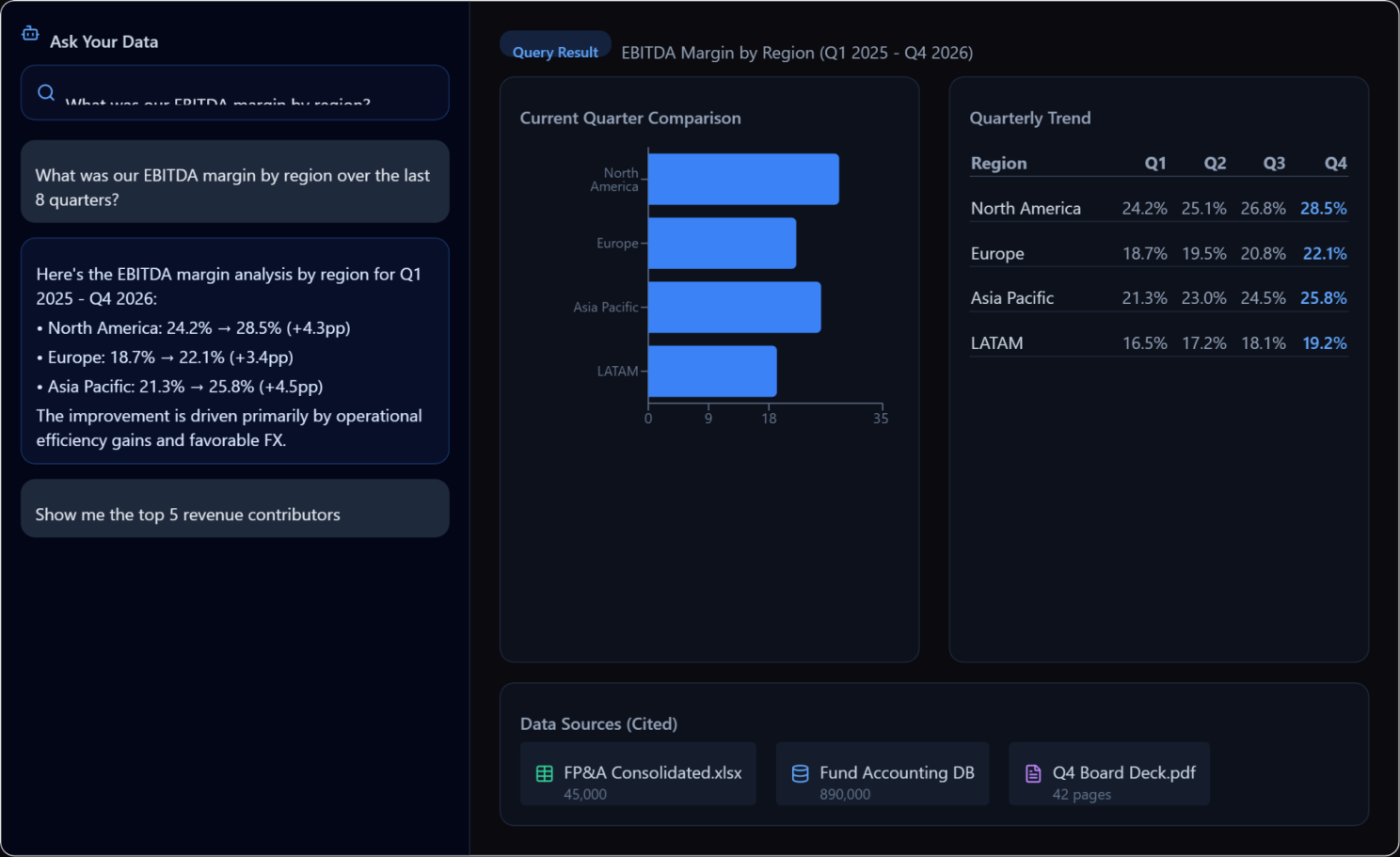
You type your question in plain English. The platform interprets what you need, identifies the right data sources, runs the calculations, and gives you the answer. Not in three weeks. Not tomorrow. Now.
"Ask in plain language or deploy agents. Scalata runs the models, calculations and document analysis for you, end to end."
The answer comes back cited—you can see exactly where each number came from. If you want to drill deeper, you ask a follow-up question. If you want it formatted differently, you say so. The system adapts to you, not the other way around.
Let's Make This Concrete
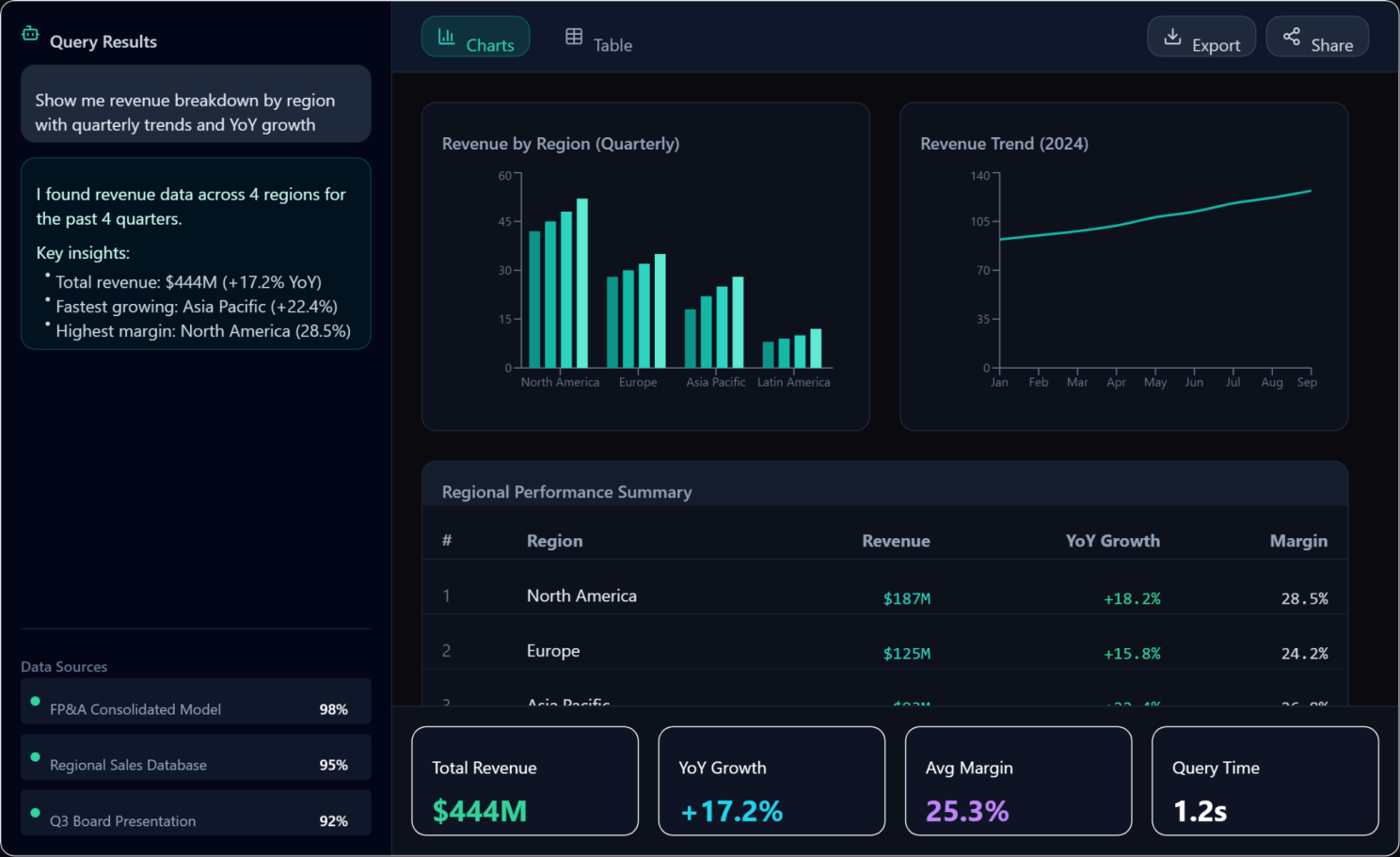
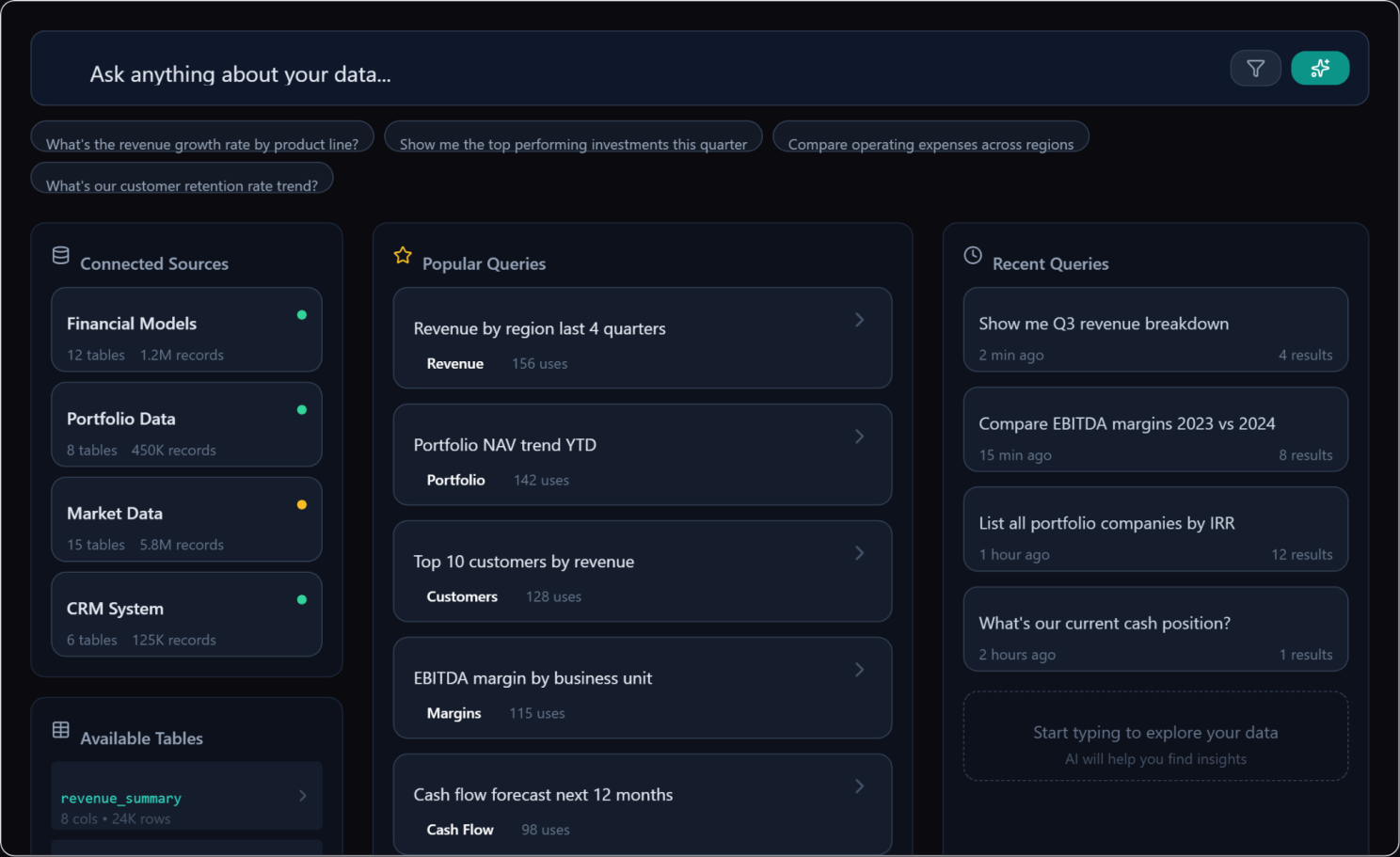
Here are questions you might ask Scalata—the same questions that currently require SQL knowledge, database access, and time:
- "Show me gross margin by business unit for the last six quarters, with quarter-over-quarter change."
- "What are the key covenants in the credit agreement we signed last quarter?"
- "Summarize the risk factors from the latest 10-K."
- "Which product lines are driving the variance to plan?"
- "Compare our SG&A as a percentage of revenue to the same period last year."
- "What's our exposure to floating-rate debt across the portfolio?"
Notice something? Some of these questions are about structured data in databases (margins, variances, exposures). Others are about information locked in documents (credit agreements, 10-Ks). Scalata handles both.
 Plain-Language Queries
Documents Become Queryable
Document AI can "turn memos, term sheets, and filings into structured, queryable data—no manual re-keying." That credit agreement sitting in your document management system? It becomes searchable. The covenants, the definitions, the amendment provisions—all accessible through plain-language queries.
Think about what this means for due diligence, for compliance monitoring, for contract management. The information that used to require a lawyer or paralegal to extract is now available to anyone with a question.
 Documents Become Queryable
Financial Intelligence Built In
Table AI brings "schema intelligence, financial-domain expertise, write-back capabilities, and auditable agents to operate across complex financial data environments."
This matters because financial data isn't like other data. Revenue recognition has specific rules. Quarter-end dates matter. Certain calculations require specific precedence. A generic query engine might give you technically correct but financially meaningless answers.
Scalata understands financial data structures. When you ask about EBITDA, it knows the standard adjustments. When you ask about covenant compliance, it knows the calculation methodology. Your plain-language queries get financially accurate answers, not just technically correct ones.
 Financial Intelligence Built In
The Result
"Get clean, cited, audit-ready insight in minutes—dashboards, reports and surveillance alerts you can act on."
That's the promise: insight in minutes, not days. Cited, so you know where it came from. Audit-ready, so you can defend it. Actionable, so it actually matters.
Democratizing Expertise
Scalata's mission includes a commitment to "democratize expertise: institutional-grade analysis in every analyst's hands, not just the specialist desk."
This isn't about replacing your analysts—it's about extending their reach. When a business user can answer their own basic questions, analysts can focus on the complex, judgment-intensive work that actually requires their expertise. The data team stops being a bottleneck and starts being a strategic resource.
And governance doesn't suffer. The same role-based permissions that control who can access what data apply to plain-language queries. The same audit trails that track database access track conversational queries. Democratized access doesn't mean uncontrolled access.
So: what do you want to know? The question you've been waiting to ask, the one that's been sitting in your email drafts or on your to-do list? Just ask it. The data is ready to answer.